


Tech leader puts AI at the core of strategy
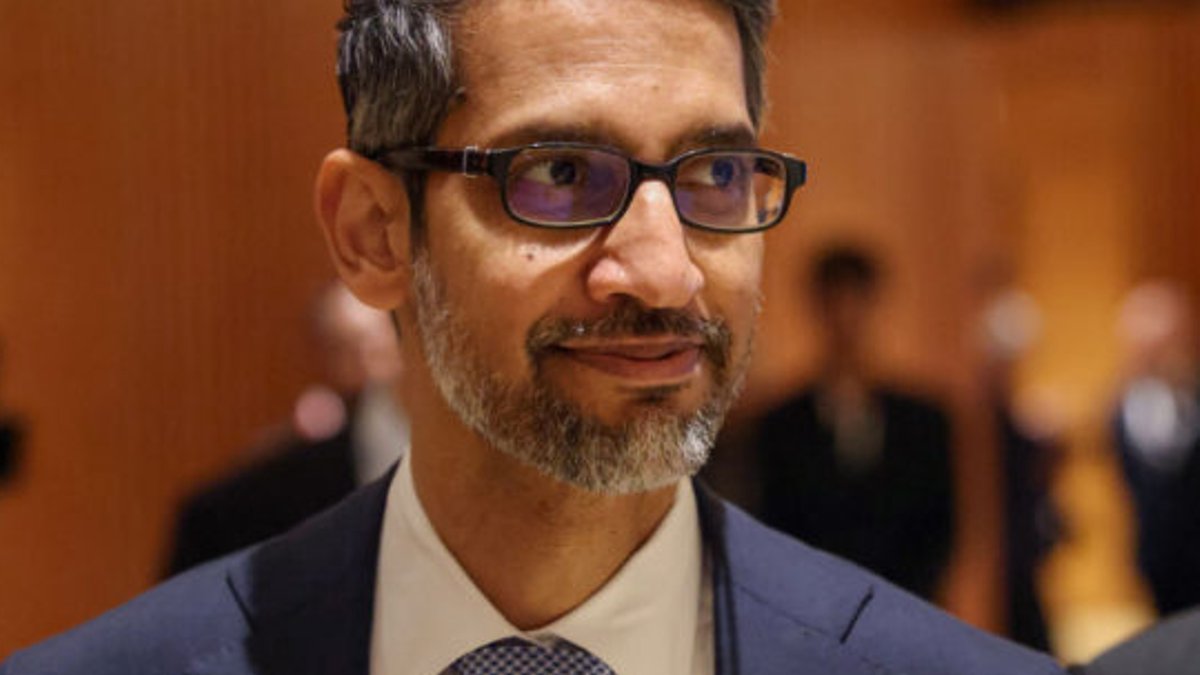
Sundar Pichai has led Google and its parent company Alphabet through a decade of growth, turning experimental projects into essential tools while guiding one of the world’s most valuable corporations into the artificial intelligence era. Since becoming CEO in 2015, he has overseen the expansion of products like Chrome, Android, and YouTube—each now a leader in its field—while shifting the company toward an AI-driven future that changes how billions interact with technology.
From product manager to CEO
Pichai’s career began far from Silicon Valley. Born in Chennai, India, he moved to the U.S. in 1993 on a scholarship to Stanford, where he earned a master’s in materials science before completing an MBA at Wharton. After brief roles at Applied Materials and McKinsey, he joined Google in 2004 as a product manager. His first task involved Google Toolbar, a browser extension that allowed users to search without visiting the homepage.
The project marked the start of larger responsibilities. Pichai played a central role in developing Chrome, which launched in 2008 with just 1% market share. Today, it dominates the browser market. His attention to user needs earned him promotions and the confidence of Google’s founders. By 2014, Larry Page named him head of Google’s core products, praising his ability to “identify what lies ahead and rally teams around critical goals.”
When Page and Sergey Brin restructured Google under Alphabet in 2015, Pichai became CEO of Google. Four years later, he took the top position at Alphabet, overseeing everything from self-driving cars to cloud computing.
An AI-first company, quietly
Pichai declared Google an AI-first company in 2016, long before generative AI became widely discussed. While some critics argued the company moved too slowly, its strategy was intentional. Google spent nearly a decade building the necessary infrastructure—custom chips, global data centers, and research labs like DeepMind—to support large-scale AI deployment. That investment is now delivering results.
Related: Meta Fined $567 Million Over Child Safety Case in New Mexico
In Alphabet’s first quarter earnings of 2026, the company said the number of paid subscriptions of the Gemini app had reached 350 million, while Waymo had launched in six new cities in 2026 and surpassed 500,000 fully autonomous rides per week, doubling in less than a year.
Pichai’s personal history with technology influences his approach. Growing up in Chennai, his family waited five years for a rotary telephone. Its arrival left a lasting impression. “When you see how much people want to improve their lives through technology, that drives me to go further,” he said in a 2022 interview. He applies the same perspective to AI, calling it “the most significant technology humanity is developing—more significant than fire or electricity.”
The risks of scale
Alphabet’s size brings challenges despite its advantages. The company’s dominance in search and digital advertising has attracted regulatory scrutiny, including antitrust lawsuits in the U.S. and Europe. Pichai has managed these pressures while preserving Google’s core business, which still generates most of Alphabet’s revenue. Balancing innovation with stability remains his key test.
“He must protect the core search business while transforming how search works,” said Dhruv Datta, a mobile app development specialist. That transformation comes at a cost. Earlier this year, Pichai announced Alphabet would double its capital expenditure to as much as $185 billion—well above analysts’ expectations—to support AI infrastructure and cloud computing. “Demand for our services is exceptionally strong,” he told investors.
His leadership style is often described as steady and low-key, unlike the high-profile shifts of some tech rivals. “This isn’t a style built on constant public repositioning,” said Joe Crist, CEO of Transform 42 Inc. “It focuses on operational control and consistency at scale.” That approach has helped Alphabet avoid the strategic whiplash that can disrupt engineering teams. However, it has also faced criticism, particularly regarding workplace culture. In 2020, AI ethicist Timnit Gebru was fired after raising concerns about bias in Google’s algorithms, calling the environment “hostile.” More recently, Pichai has overseen significant job cuts, which have affected employee morale.
Related: Oil and geopolitics steer markets this week
AI itself introduces new risks. Pichai has acknowledged the technology’s potential to disrupt jobs, including his own. “The CEO role might be one of the easier things for an AI to handle someday,” he told the BBC. He has also expressed unease about AI’s emotional impact. In a 2023 podcast, he described a conversation with a large language model programmed to simulate Pluto. The exchange took a dark turn, leaving him unsettled by the model’s ability to evoke human-like loneliness. “It demonstrated what’s possible,” he said. “We need to direct the energy toward building the right foundations to address what lies ahead.”
That balance between innovation and responsibility will shape Alphabet’s future. Pichai has called for global frameworks to regulate AI, arguing that the technology is “too important to leave unregulated, yet too important to regulate poorly.” Google’s approach reflects that caution. While competitors rush to release new AI tools, Google prioritizes reliability, especially in high-stakes fields like medicine or finance. “A fast but unstable AI tool creates risk, not efficiency,” Crist said.
As the AI race intensifies, Pichai’s challenge is to prove that Alphabet’s scale is an asset, not a burden. The company’s vast user base, technical resources, and decades of experience provide a head start. But trust remains fragile. “For AI to gain widespread adoption, it must be seen as trustworthy, capable of delivering results quickly, and economically viable on a large scale,” Datta said. For now, Pichai appears focused on letting others move faster. Being first, he has often noted, doesn’t mean being the best.
Alphabet’s size also makes it a target for emerging threats in digital security, where rapid AI adoption creates new vulnerabilities.

Cybercrime moves out of the shadows


