


PVC import restrictions may push domestic prices
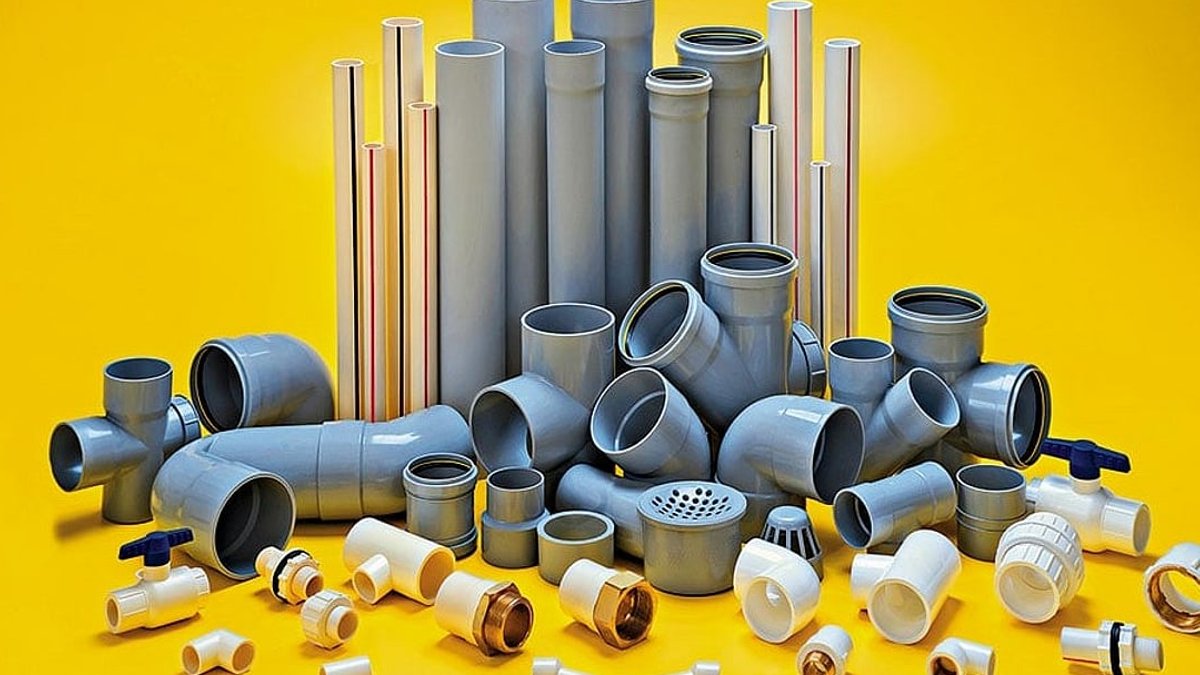
India’s trade regulators have introduced a new barrier for cheap plastic imports, a move that analysts predict will raise costs for local manufacturers. The Directorate General of Foreign Trade (DGFT) last week established a minimum import price for suspension grade PVC resin. This restriction, which stays in effect for six months, is designed to curb under-priced shipments but will likely result in higher domestic prices for the commodity. The policy specifically targets imports valued at $0.766 per kg or less.
Shipments falling below this price point now require a distinct import license from the DGFT, in addition to standard customs duties. Goods priced above the threshold can enter freely. According to the Global Trade Research Initiative (GTRI), this adjustment is expected to impact virtually every major foreign supplier currently sending goods to India. While the intent is to shield local producers, the immediate effect will probably be felt by downstream industries that rely on this material.
Major Suppliers Affected by Price Floor
The data indicates that India imported a total of $1.63 billion worth of this product during the 2025-26 period. China emerges as the largest source, supplying goods worth $735.4 million. Japan follows as the second-largest exporter with $280.4 million in shipments. Taiwan exported $152.7 million worth of resin, while South Korea and Mexico sent $123.6 million and $92.9 million respectively.
Related: Caliber Mining Shares Jump 47 Percent
Other notable suppliers include Indonesia, Thailand, the United States, Singapore, and Vietnam. Ajay Srivastava, the founder of GTRI, highlighted that the average import prices from these nations are uniformly low. China’s average price sits at $0.65 per kg, making it particularly vulnerable to the new restrictions. Japan’s average is $0.74 per kg, and Taiwan’s stands at $0.72 per kg.
The list continues with South Korea at $0.70 per kg, Mexico at $0.71 per kg, and Indonesia at $0.70 per kg. Thailand, the US, and Singapore all hover near the $0.67 to $0.70 per kg mark. Vietnam is at the higher end of this specific group at $0.75 per kg. Virtually every major supplier ships below the DGFT threshold, meaning the existing import trade falls into the restricted category unless suppliers increase their declared prices.
This approach mirrors historical attempts to manage trade deficits through administrative hurdles rather than outright tariffs, often creating a temporary price shock that ripples through construction sectors. It reflects a broader strategy to discourage dumping without formally invoking anti-dumping duties, which require lengthy investigations. However, such measures usually offer limited relief if domestic manufacturing cannot fill the void left by restricted imports.
Related: Indonesia Undergraduate Pharmacy Education
Cost Calculations and Duty Structures
The financial burden on importers is set to rise due to the stacked levy system. Suspension grade PVC imports currently attract a 7.5% Basic Customs Duty. There is also a 0.75% Social Welfare Surcharge applied to the value. These charges combine to create a total customs duty of 8.25%, excluding the Integrated Goods and Services Tax (IGST).
Consequently, the DGFT’s minimum import price translates into a minimum landed cost of about $0.87 per kg after 5% IGST. Srivastava indicated that the principal impact of the notification will be inflationary for domestic resin prices rather than a reduction in the volume of goods entering the country. The product serves as a key raw material for pipes, fittings, cables, and various plastic products.


